Table Of Content
The Peabody Essex Museum in Salem holds 511 original documents from the 1692 Salem witch trials. These documents — such as letters, trial transcriptions and court orders — were entrusted to the museum by the Commonwealth of Massachusetts for safekeeping. Some can be viewed and read online here, while a few works of art connected to the trials are on view in the American Art galleries at PEM. Look for the dramatic painting, “Trial of George Jacobs, August 5, 1692” by Tompkins Harrison Matteson, 1855.

Haunted Happenings: October in Salem
Learn about four centuries of inclusive history at one of America’s most beloved historic homes. There are a few other connections to the witchcraft period involving John Turner. When John Proctor’s servant Mary Warren accused Salem Town widow Ann Pudeator of witchcraft, one of Warren’s claims involved Pudeator’s specter causing a young Turner to fall from a cherry tree, knocking him unconscious.
Follow us
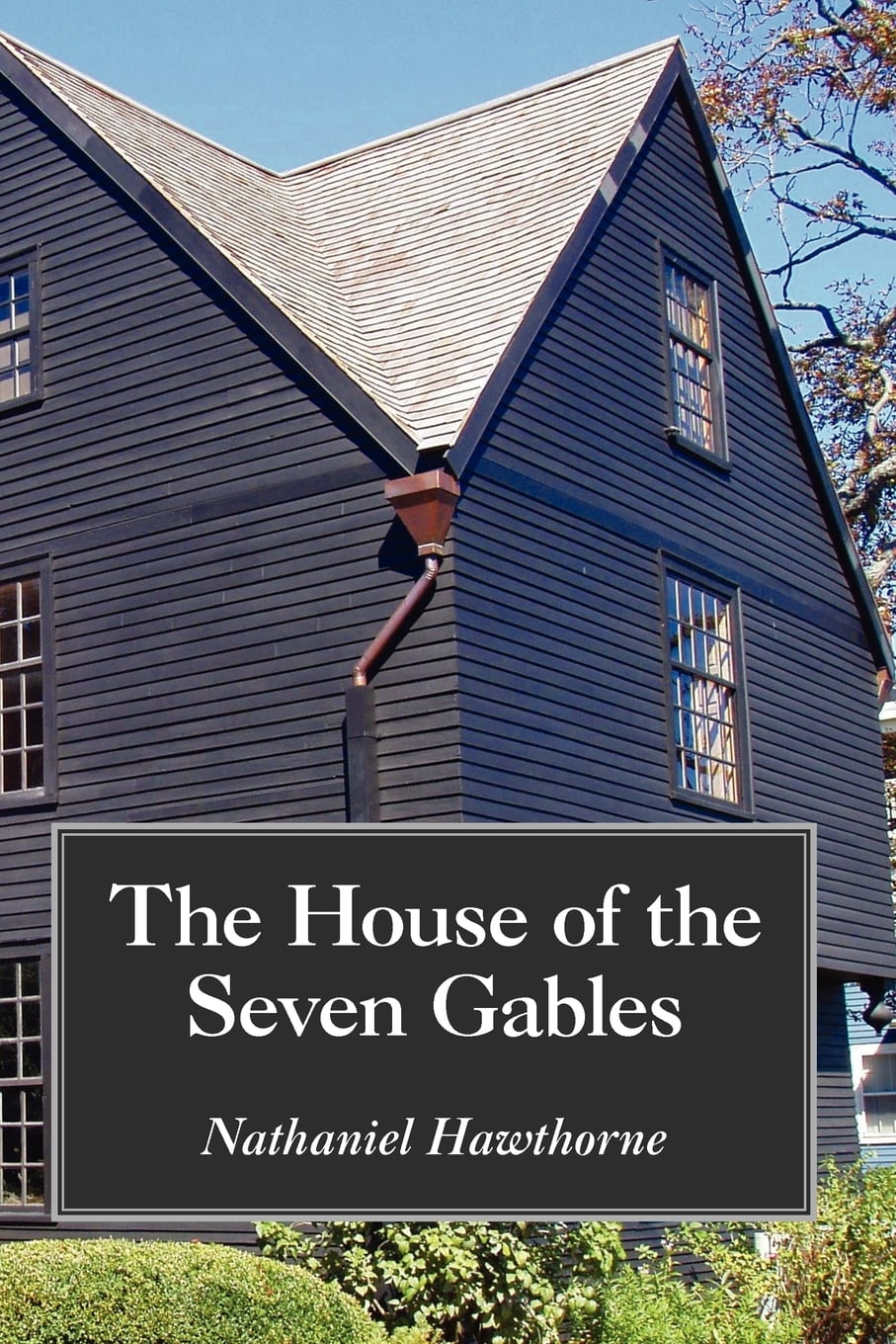
You will also see displays on Hawthorne’s life, work, and historic Salem in general. At the end of the tour, you can choose to explore the small house of Hawthorne’s birth, which was also moved from its original location on Union Street to sit beside the House of the Seven Gables. A few blocks away on Hawthorne Boulevard towers a large statue of Nathaniel Hawthorne himself. The earliest section of the House of the Seven Gables was built in 1668 for Captain John Turner, a wealthy sea captain and merchant who was born in Salem, Massachusetts in 1644.
Member Event: A Visit to the Wenham Museum
The “Bewitched” statue is at 235 Essex St., at the intersection of Washington and Essex streets in downtown Salem. The Colonial Revival seaside gardens capture the charm of four centuries of gardening in New England. The raised-bed areas of the garden are considered to be the most historically significant feature of the grounds. The patterned beds were laid out in 1909 by Joseph Everett Chandler, the architect who partnered with Caroline Emmerton on the restoration of The House of the Seven Gables. The garden was designed in a Jacobean style as an “oasis of beauty” to be enjoyed by her neighbors. Miss Emmerton was adamant about the maintenance of the grounds and set the standards practiced today.

Emmerton was an incorporator of the Society for the Preservation of New England Antiquities in addition to being a strong proponent of social welfare. She purchased the house in 1908 and transformed it to achieve her preservationist and reformist goals while also emphasizing its connections to Hawthorne’s novel in order to bring in revenue. As she envisioned it, the “restored” house with its postmedieval appearance would teach immigrants about American history and values while also providing housing for settlement workers. Emmerton used ticket and store sale proceeds from the museum to fund The House of the Seven Gables Settlement Association. In the late 1800s/early 1900s, the settlement house movement was seen as the progressive method to help newly arriving immigrant families adapt to life in their new cities.
Emmerton grew up in a city that was transitioning from its past as a major shipping port to its future as a manufacturing center for both textiles and the leather industry. George Emmerton, Caroline’s father, worked in the growing chemical industry. The Salem that Caroline grew up in was the Salem of “The Gilded Age,” when advances in machinery led to economic growth, waves of immigration, and tension around class inequality. The Nathaniel Hawthorne Birthplace is now immediately adjacent to the House of the Seven Gables, and access to it is granted with either a regular admission fee or a grounds pass.
By visiting The House of the Seven Gables, you agree to follow our Policies and Procedures. Many interesting features of the original mansion remain, including unusual forms of wall insulation, original beams and rafters, and extensive Georgian paneling.
Nathaniel Hawthorne - Minute Man National Historical Park (U.S - National Park Service
Nathaniel Hawthorne - Minute Man National Historical Park (U.S.
Posted: Tue, 28 Apr 2020 07:00:00 GMT [source]
History Alive
But then, what happened in Salem in 1692 may never be accurately understood. The saltbox home that the family leased in 1678 originally sat on 300 acres. The site is now 25 acres and includes a reproduction of the Salem Village Meeting House where early witchcraft hearings occurred.
Since 1909, Chandler's restoration has been carefully maintained. In 1972 the site and buildings became a National Register of Historic Places district; in 1994, The House of the Seven Gables Settlement Association built the Seamans Visitor Center. The novel is set in the mid-19th century, but flashbacks to the history of the house, which was built in the late 17th century, are set in other periods.
This belief is based on the knowledge that Hooper purchased part of Endicott’s land and then built his home upon it. In the future, a dendrochronology study will provide science-based evidence that will determine the age of the posts and beam. John Turner II and his family modernized the décor of the home in the Georgian style. Wood paneling was added to the walls of the parlor, great chamber and dining room chamber. Today, these enhancements are considered some of the finest examples of high-style Georgian paneling. Judge Pyncheon arrives at the house hoping to find information about land in Maine, rumored to belong to the family.
From enslaved people to indentured servants to immigrants fleeing... The Salem Witch Museum is a 15-minute walk from The House of the Seven Gables. The Witch House is a 24-minute walk from The House of the Seven Gables. The cemetery and the memorial are next to each other, and a 14-minute walk from The Gables. Whether you're a history buff, a sports fan, a foodie, or an outdoor enthusiast, the Bay State offers a rich tapestry of attractions that cater to all tastes and interests.
Tickets are released on a monthly basis (for the following month); they are available to members the 1st of each month, and then to the general public starting the 4th of each month, with the exception of October. After John Turner III lost the family fortune, the house was acquired by the Ingersolls, who remodeled it again. A few years later, a kitchen lean-to and a new north kitchen ell to the rear of the house were added. By 1676, Turner had added a spacious south (front) extension with its own chimney, containing a parlor on the ground floor, with a large bed chamber above it.
Her birth house still stands on Summer Street and her home as an adult can still be seen today on Essex Street. The mark of her generous spirit can be found at the Women’s Friend Society on Hawthorne Boulevard and at Plummer Youth Promise on Winter Island. Caroline Osgood Emmerton was born on April 21, 1866 in Salem, Mass.
Although it is indeed the house in which Hawthorne was born and lived to the age of four, the house was sited a few blocks away on Union Street when he inhabited it. Horace Ingersoll, Susanna's adopted son, told Hawthorne a story of Acadian lovers that later inspired Henry Wadsworth Longfellow's 1847 poem Evangeline. No matter the season, Massachusetts offers an abundance of outdoor activities to enjoy. Where else can you start your morning with a mountain hike and end the day lounging on a scenic beach?
Inspired by Jane Addam’s Hull House, she purchased what was the old Turner Mansion in 1908 and worked with architect, Joseph Everett Chandler to restore it to its original seven gables. Chandler was a central figure in the early 20th century historic preservation movement and his philosophy influenced the way the house was preserved. In its final iteration, the Turner House is an exemplar of the Colonial Revival movement.



No comments:
Post a Comment